
We’ve just witnessed the greatest political commitment to support young people that our sector has seen for many years. But the result must be effective support for every unemployed young person, including those who are hardest to reach.
All of us at The Spear Programme who coach young people in vital job skills are encouraged by the end-to-end support the government seems to be offering. The package just announced includes training, job opportunities and more apprenticeships.
As the potential of nearly a million young people sits waiting to be realised, we’re glad to see the government acting to address this.
But beneath the headline figure are individuals. And the reality is that it will be a huge challenge to roll out support that is tailored, rooted in local needs and able to engage the many young people who aren’t in touch with a Jobcentre or a Youth Hub.
Far from the world of work
We’ve seen a huge rise in social isolation among young people. Our coaches have met scores who’ve struggled even to leave the house. One in three of those who do the Spear Programme are not claiming benefits, so they’re not in touch with the Jobcentre.
More widely, some estimates suggest that up to half of the 946,000 young people aged 16-24 who are “not in education, employment or training” (NEET) are not claiming benefits, and since they’re not in touch with the Jobcentre are defined as “hidden”.
More than half of NEET young people have a health condition, according to recent figures from the Department for Education. And around one in five have a mental health condition.
It is critical that the government finds a way to engage the significant number of young people who are furthest from the world of work: those with multiple complex and intersecting barriers.
This is the group that Spear works with – who didn’t get their Maths and English GCSEs, who might have grown up in care or with the support of a social worker. Two in five of our trainees have mental health challenges.
But a year after finishing Spear, 75% are in work or study.
Self-belief is key
We specialise in reaching and supporting those who are harder to reach – around half of our referrals come from sources that are not the Jobcentre, such as GPs, social workers and probation services.
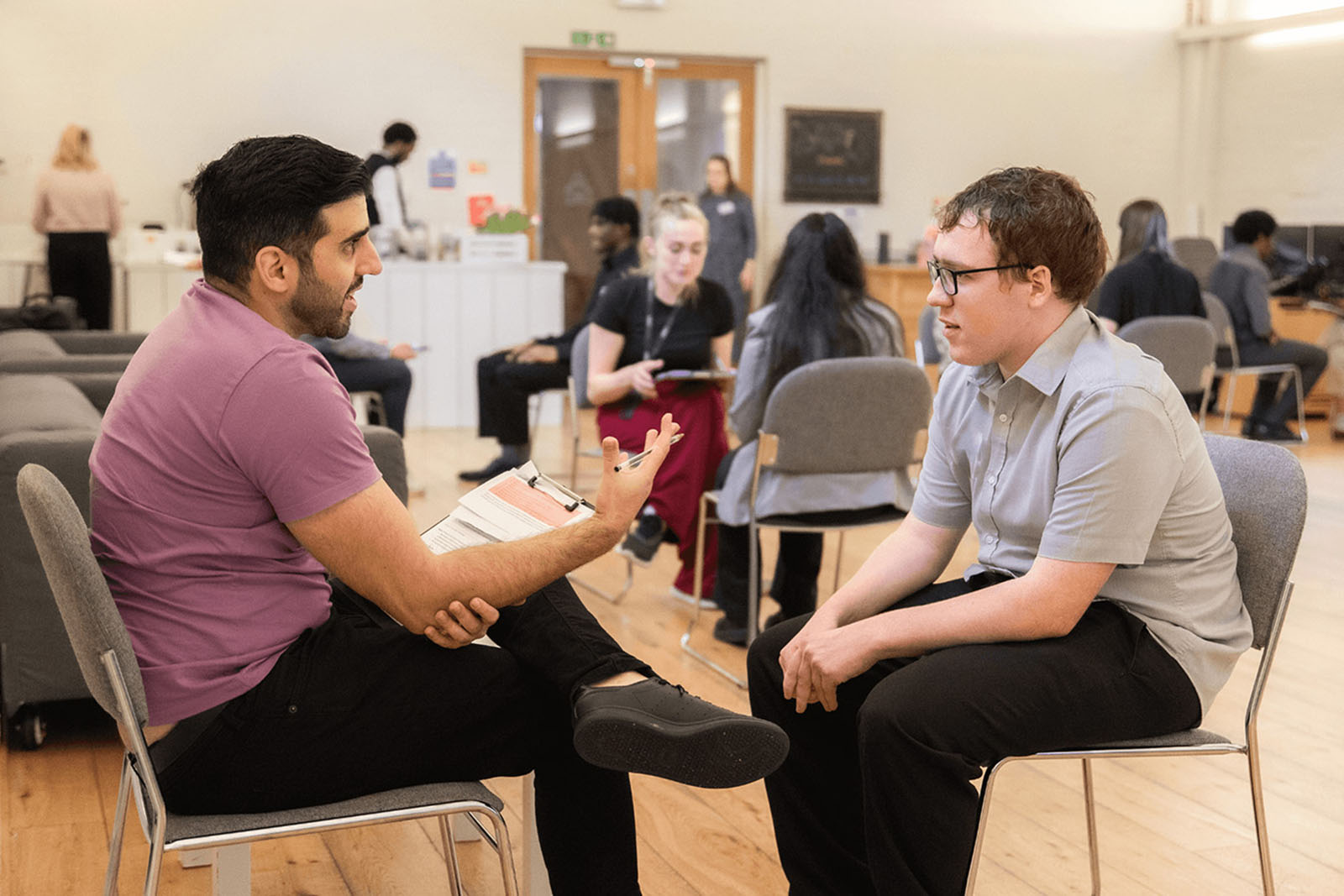
The key to supporting this group is coaching them to believe in themselves. And that requires a trusted adult to believe in them first. To spend time understanding what’s holding them back and then working with them to change their mindset and confidence so they not only get into work but thrive there. This is not a quick process, which is why Spear's support runs for up to a year.
Earlier this month, Faye, a Spear trainee, spoke at an event in York. She had been homeless and struggled with self-harm and suicidal thoughts. She had thought: “If I couldn’t even get a job then what is the point in living?”
She says Spear transformed her.
She now has a job at Nando’s. She’s just got the keys to her council flat and will be able to move out of her temporary accommodation. She’s feeling significantly more hopeful about her future now that she has a job and has completed Spear.
We believe all young people deserve the chance to unleash their potential. And Spear stands ready to serve those who need us.